
City-led planning
Workforce scope aligned with Madinah operating conditions
City workforce support
Employer guide to planning hotel housekeeping staff for Madinah hotels under an eligible Ajeer arrangement, with workload, screening, supervision and roster controls.
Employer-facing manpower supply and workforce support for Madinah operations.
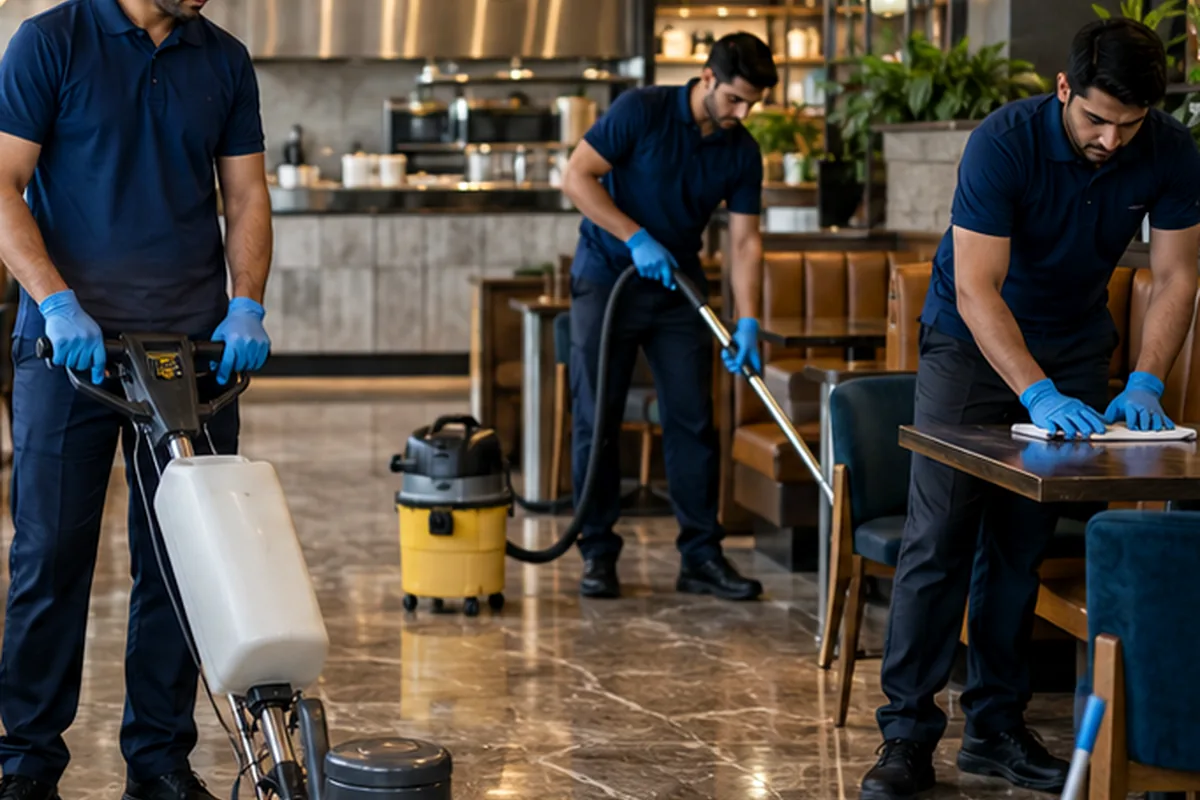
A useful Madinah requirement starts with measurable workload, not a general request for hotel workers. Calculate the team from occupied rooms, stayover services, departures, deep-clean rooms, public areas, linen calls, extra beds, guest requests and quality inspections. Separate baseline occupancy from arrival or departure peaks, large groups, banquet activity, weekly-off relief and absence cover. Show the quantity needed for each shift and work zone, the productive hours after breaks and transport, and the supervisor span. This makes the service proposal testable and helps the hotel compare actual output with the roster without treating Ajeer as a guarantee of supply or performance.
Use occupied rooms, stayover services, departures, deep-clean rooms, public areas, linen calls, extra beds, guest requests and quality inspections to calculate the shift requirement.
Assess bed making, bathroom sanitation, chemical handling, room-status reporting, guest privacy, lost-property procedure, safe trolley use and supervisor inspection before property access.
Document room assignment sheets, master-key control, minibar boundaries, do-not-disturb procedure, chemical labels, linen separation and documented room release for the named hotel.
Verify the applicable service, worker, occupation, beneficiary, site and dates before duty.
The proposed team may include housekeeping supervisors, room attendants, public-area attendants, housemen and housekeeping coordinators. Keep tasks and acceptance evidence separate for each role. Screening can combine experience review, structured questions, document checks and a practical assessment suited to the actual duty. Important competence areas include bed making, bathroom sanitation, chemical handling, room-status reporting, guest privacy, lost-property procedure, safe trolley use and supervisor inspection. The Ajeer record addresses temporary work authorization under the applicable service; it does not replace a skill assessment, professional credential, food-safety requirement, equipment authorization or the hotel's own access approval.
Use occupied rooms, stayovers, departures, vacant-dirty rooms, expected early arrivals, deep-clean rooms and out-of-order rooms to build the shift board. Apply a realistic productivity range by room type and service standard, then allow for travel between floors, linen calls, guest requests and inspections. Suites, family rooms and rooms requiring extra beds or special cleaning should not be counted as standard units. The supervisor roster should show who releases each floor and how rejected rooms return to the attendant without hiding rework.
Housekeeping access involves bedrooms, guest belongings and controlled keys. Define master-key custody, do-not-disturb handling, entry announcements, occupied-room rules, lost-property bags, minibar boundaries, damaged-item reporting and escalation for a guest who remains in the room. Workers should never photograph documents, belongings or room information. Supervisors should sample key logs and room-release records, and any person moved from public areas into bedrooms should receive the full room-attendant induction first.
Room completion depends on clean linen, amenities, working trolleys and timely defect response. Set par levels by floor, define the linen issue point and record shortages rather than asking attendants to improvise. Housemen can support linen, extra beds, waste and heavy items, but their duties and access should be listed separately. Use room inspection results, rework, guest complaints and rooms released by the required time to review the service; attendance alone does not demonstrate housekeeping output.
This cluster is designed around visitor-arrival waves, central-area hotel access, room and meal schedules, guest-assistance standards, property transport and phased handovers. Madinah workload changes with group arrivals, prayer schedules, meal service, occupied-room needs, room turns and departure waves. Each department needs its own demand curve and relief plan rather than one general seasonal total. Madinah hotels should connect pickup points, accommodation, uniforms, timekeeping and shift handovers to the named property. If a worker, occupation, beneficiary or site changes, the assignment should be reviewed before the new duty begins. Teams need respectful guest-care instructions covering privacy, mobility assistance, language, lost property, quiet-area conduct, complaints and emergency escalation within the hotel's approved service standards.
Madinah hotel demand often rises around group arrivals, room release, prayer schedules, meal periods and coordinated departures. Build a department timeline from occupied rooms, stayover services, departures, deep-clean rooms, public areas, linen calls, extra beds, guest requests and quality inspections, then identify the hours when two activities overlap and extra relief is genuinely required. Group size alone is not enough: room readiness, luggage movement, meal timing and guest-assistance needs may peak at different moments. Place a provider supervisor at the handover points where delays or guest requests are most likely. The resulting roster should show which people work each shift, where they report and how the hotel will adjust coverage when an arrival time changes.
Every temporary team should understand the property's expectations for respectful conduct, privacy, quiet areas, guest information, lost items, mobility assistance and complaint escalation. Translate those standards into role practice through bed making, bathroom sanitation, chemical handling, room-status reporting, guest privacy, lost-property procedure, safe trolley use and supervisor inspection. The hotel should identify matters that workers may resolve, matters that require a supervisor and matters that must be referred immediately to security, management or emergency support. These boundaries are particularly important when workers support families, older visitors, organized groups or guests who need language assistance. A signed induction record should connect the instruction to the named worker, hotel and assignment dates.
Hotels close to one another can still have different loading areas, staff entrances, room layouts, service lifts, uniform rules and reporting contacts. Record the transport point, property access, changing area, work zone, supervisor and room assignment sheets, master-key control, minibar boundaries, do-not-disturb procedure, chemical labels, linen separation and documented room release for every location. Central stores, laundries, kitchens and staff accommodation should be identified rather than treated as invisible extensions of the hotel. If a guest group is moved and the operational team is asked to follow, the provider and hotel should review whether the actual beneficiary, site, occupation and temporary period remain consistent with the approved arrangement before changing the duty roster.
Temporary workers may join and leave in groups while the hotel continues to serve guests. Pair each joining group with a supervisor, property orientation and role-specific review, then overlap critical handovers where service cannot pause. The outgoing shift should hand over unfinished rooms, maintenance defects, guest requests, lost property, linen shortages and restricted rooms to the incoming supervisor. Before a group leaves, reconcile attendance, incidents, access, equipment and unresolved guest or property matters. Record who accepts the remaining work and how any replacement is verified. This phased approach prevents knowledge from leaving with the outgoing team and allows the hotel to reduce seasonal coverage without creating gaps in rooms, food service, guest support or facility operations.
Induction should cover the assigned hotel, reporting point, supervisor, duty zone, guest-area conduct, emergency contacts, restricted areas, equipment, PPE, welfare and incident reporting. For this role, add room assignment sheets, master-key control, minibar boundaries, do-not-disturb procedure, chemical labels, linen separation and documented room release. Check that access expires with the authorized period and that relief workers receive the same review before joining. First-shift readiness should be signed by the provider supervisor and the hotel contact responsible for the service area.
The outgoing shift should hand over unfinished rooms, maintenance defects, guest requests, lost property, linen shortages and restricted rooms to the incoming supervisor. Attendance, overtime, service exceptions and replacements should be recorded against the same shift reference. When relief is required, verify the incoming worker, occupation, beneficiary, hotel, dates and induction before access. The replacement should not use the departing worker's credentials or rely on an informal message as evidence of authorization. Repeated absences or performance problems should follow the agreed escalation route without bypassing worker rights or the applicable official process.
The commercial agreement and Ajeer authorization are separate controls. Verify the applicable service, worker, occupation, provider, beneficiary Madinah hotel, location and dates before duty. Under the cited outsourcing model, the service-providing establishment should maintain direct supervision. Allocate accommodation, transport, meals, rest, overtime, uniforms, PPE, emergency support, complaints and return arrangements. Workers should understand their terms and should never pay unauthorized recruitment, registration or placement charges. A quotation does not guarantee eligibility, approval, availability or a fixed joining date.
Name the Madinah property, department, work zones, operating dates and service result.
List housekeeping supervisors, room attendants, public-area attendants, housemen and housekeeping coordinators, quantities, hours, breaks, relief and provider supervisors.
Document experience, role checks, bed making, bathroom sanitation, chemical handling, room-status reporting, guest privacy, lost-property procedure, safe trolley use and supervisor inspection and any required credentials.
Allocate access, induction, uniforms, PPE, tools, transport, accommodation, meals and welfare.
Match each worker, occupation, provider, beneficiary property, site and temporary period before duty.
Record replacements, extensions and property changes; remove access and reconcile records when the assignment ends.
No. The commercial agreement does not replace eligibility checks, the correct Ajeer service, accurate worker and establishment data, and the official approval process.
Do not assume so. Verify that the approved arrangement covers every actual beneficiary property, location, occupation and period before moving the worker.
Under the cited outsourcing model, the service-providing establishment should keep direct supervision visible while coordinating the hotel's service and safety standards.
No. Temporary work authorization and role competence are different. The provider and hotel still need proportionate screening, induction and task authorization.
Send the hotel, service area, housekeeping supervisors, room attendants, public-area attendants, housemen and housekeeping coordinators, quantity by shift, dates, role standards, access conditions, supervision and responsibility split.
City workforce support
AL AHAD GROUP JOB SEEKER UPDATES
Follow the AL AHAD GROUP Saudi job channel for vacancy announcements and practical job-seeker guidance. Following the channel does not guarantee shortlisting, selection, visa processing or employment.